


Technique
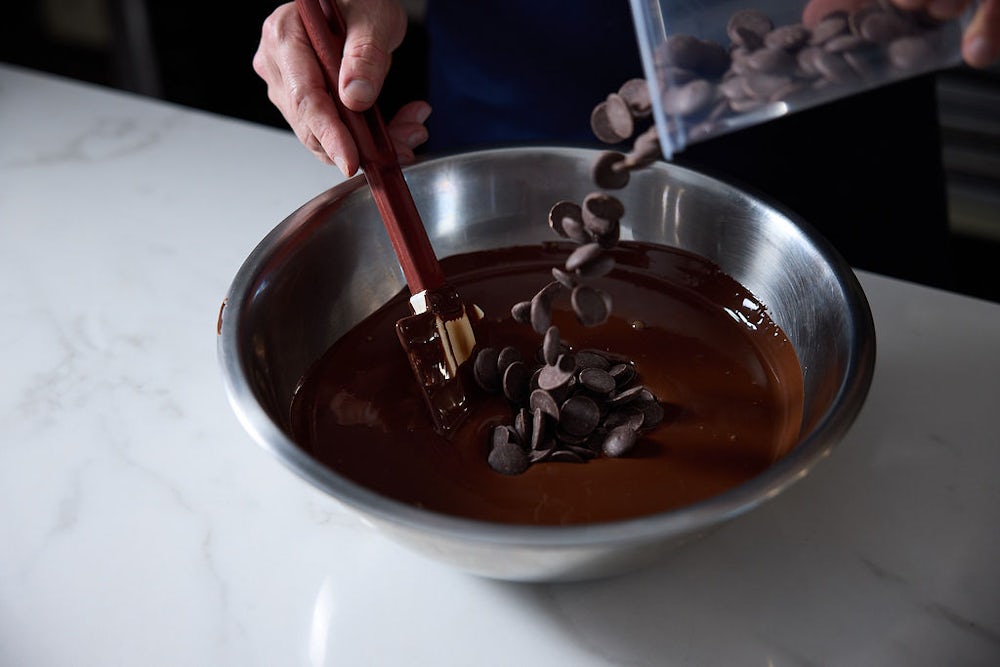
Chocolate Melting
- This contains
- Dairy
In liquifying chocolate, it is the cocoa butter, the fat, that is actually getting melted – changing from solid to liquid state. Because of the triglyceride composition of cocoa butter, it melts over a temperature range (~90-120°F), not just one single point. This is what makes chocolate so palatable, and for this reason melting is in important part of handling and tempering chocolate.
Method
- 1
MELTING CHOCOLATE
Recommended methods for melting chocolate:
- Water bath or jacketed kettle (take caution when using, as exposure of water or steam will cause the chocolate to seize and thicken)
- Overnight in a chocolate melter or warming oven set to 130°F
- Microwave on medium power at short intervals (15seconds) with stirring
KEY TEMPERATURES FOR WORKING WITH CHOCOLATE
- Chocolate storage: 60-70°F, <50% relative humidity, well ventilated, free from foreign aromas
- Workspace environment: 65 -75°F
- Moulds: 85-90°F
- Confectionery centers: 70 - 80°F
- If using a cooling tunnel with air flow and multiple cooling zones:
- Initial cooling 65 -75°F
- Main cooling 55 - 60°F
- Exit cooling 65 - 70°F